

Reverse Sear Prime Rib Recipe
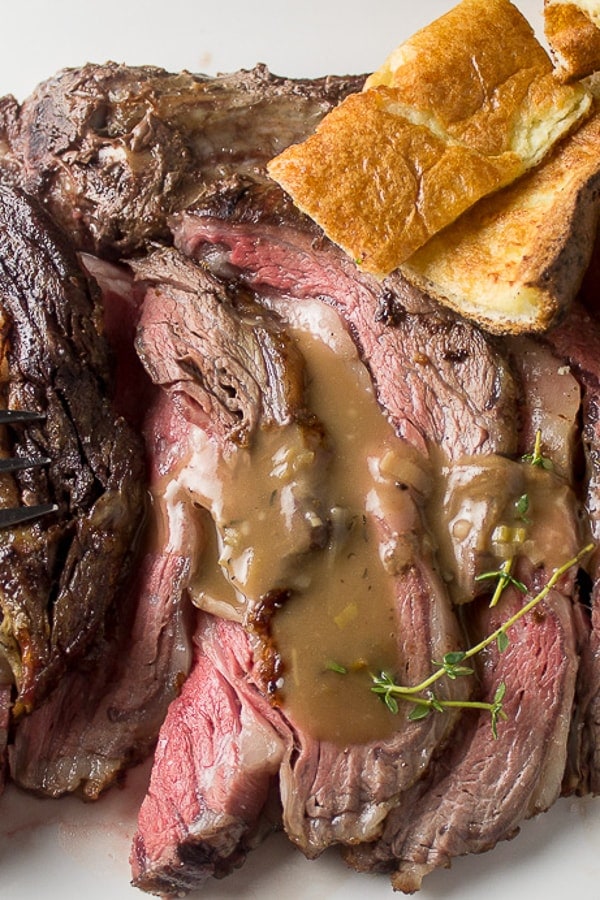
This prime rib recipe uses the reverse-sear method to create mouth watering, medium-rare, tender meat throughout the entire roast. It doesn't get better than that.
Prime rib is one of my top 3 favorite meals on the planet. It's the king of holiday roasts.
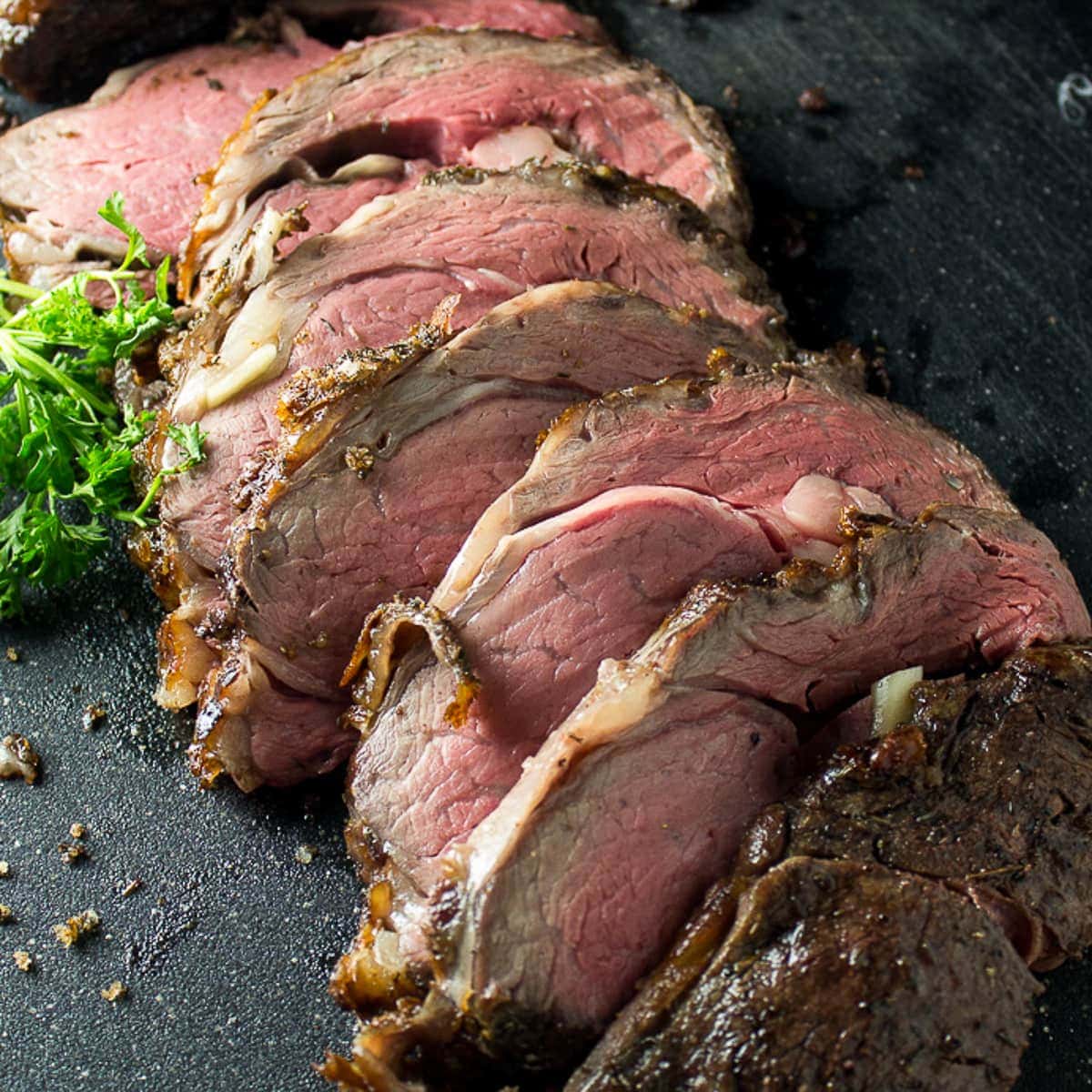
I've been making prime rib (roast beef) my entire adult life using the more typical method of high heat for the first 15 minutes then lower heat for the remaining time.
I am now a convert for reverse searing. It simply makes the best prime rib ever.
What is prime rib?
Prime rib is a high-end cut of beef that has considerable marbling (fat) which adds amazing flavor. The bone-in cut is called a standing rib roast. The boneless cut is called a ribeye roast.
The "prime" on the package is a USDA designation that tells you the meat is of high quality
How to cook a prime rib roast
There are several ways to cook a prime rib roast
- regular oven roasting (typically the high-low method)
- slow roasting
- sous vide method – try our sous vide prime rib with this method, and
- reverse sear method. This method may not be as popular, but it definitely should be. I discovered this method from author and chef J. Kenji Lopez-Alt's Serious Eats.
Why the reverse sear method is great
I've tried this method many times now and I am impressed. It's as close to a perfect prime rib as you can get. Here's why:
The meat is cooked evenly throughout the roast instead of pink/red in the middle and medium to well done on the two inches toward the outside.
And you can make the roast more than an hour ahead and do the last step of high heat roasting right before serving. This increases your chance of getting warm meat to your guests – a huge plus for anyone who agonizes about keep a prime rib warm without overcooking it (like me). If you're interested, here's more on how to keep foods warm.
What kind of meat to buy
Of course, the only way to get an outstanding end result is to begin with an outstanding piece of meat, meaning a well marbled Prime rib. Look for USDA Prime, AAA, Certified Angus Beef or USDA Choice (not as good as Prime, but still good).
All these are more expensive, but worth it. The rest is technique. And it's pretty simple.
What to serve with prime rib
My favorite side dish with prime rib is our Basic Mashed Potatoes and beef gravy. I also love fried potato and onions or crispy oven roasted potatoes with roast beef.
Other great sides are Yorkshire Pudding, Parmesan Roasted Cauliflower, Marinated Tomato Salad and Roasted Honey-Glazed Carrots.
Tailor To Your Taste
- Seasoning: Many chefs like to let the flavor of prime rib shine through and only use salt and pepper as seasoning. I've always added the garlic slivers (which in my opinion add sensational flavor), a bit of mustard and sometimes a sprinkle of thyme – and I think the flavor of the meat is still the star, but it's up to you.
- Pre-seasoning option: To add even more flavor and a crustier darker exterior, there's an optional step you can try. A day or two ahead, pat the roast dry with a paper towel, salt it, then place it in the fridge on a rack, uncovered, to dry out and allow the flavor of the meat to develop. Bring the roast to room temperature (1-2 hours) before roasting. I often skip this extra step since I always serve my prime rib with gravy which also adds to the flavor.
- Exterior Crust: You can also dry the roast in the fridge without the salt. This won't add flavor, but it will give you the crustier exterior.
Make Ahead
- The reverse sear method allows you to make the roast 30-90 minutes ahead. The final high-heat roasting should be completed 6-15 minutes before serving, depending on the size of the roast.
Love the reverse sear method?
Then try our boneless pork roast with gravy (reverse sear).
How to roast a prime rib reverse sear
The key steps are as follows:
- Initially roast the beef in the oven at a very low oven temperature of 250F/121C (or even 200F),
- Rest the beef for 30-90 minutes, and then
- Blast the beef at high heat in a 500F oven for the final 6-15 minutes, depending on the size of the roast.
A 3 pound roast takes about 2 1/4 hours for the low-heat part of the roasting. A much larger roast could take 3-4 hours.
So the long roasting time can be seen as a downside, but if you're having a dinner party and have lots of other things to do while the beef is roasting (who doesn't), it makes a lot of sense.

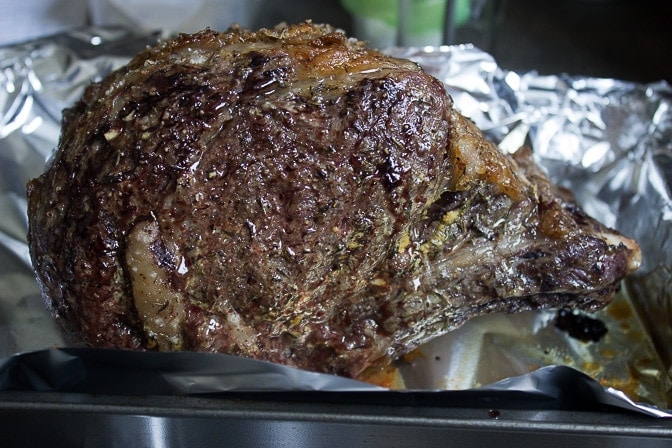
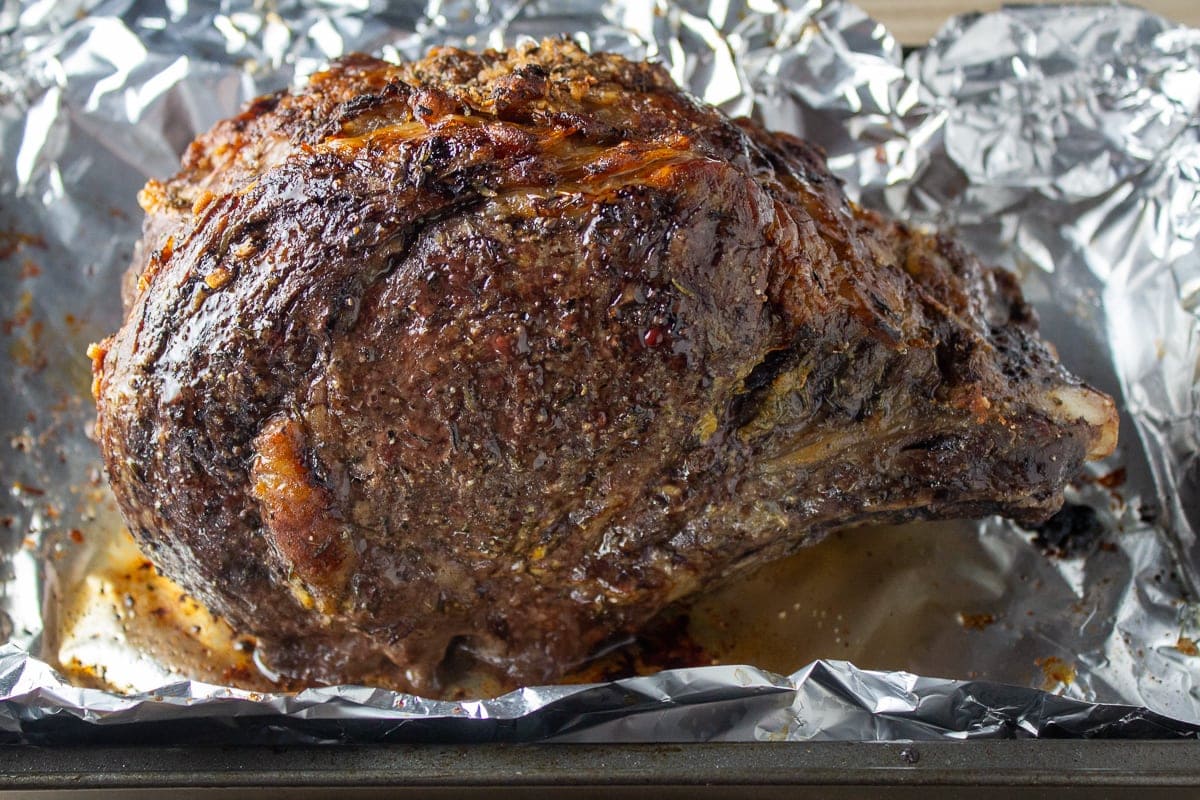
Step 3: Finish roast for 6-12 minutes in a hot oven at 500F/260C. The internal temperature will reach 130F/54.4C.
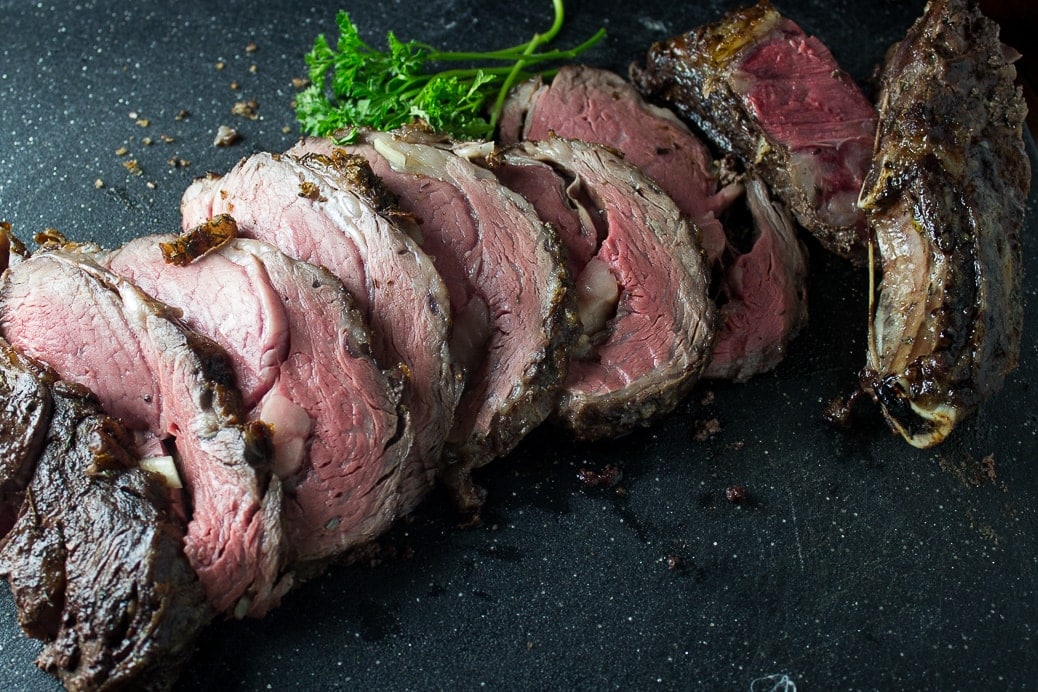
Classic Prime Rib (Reverse Sear)
This classic prime rib recipe uses the reverse-sear method to create mouth watering, medium-rare meat throughout the entire roast. It doesn't get better than that.
Prep Time 5 mins
Cook Time 2 hrs 10 mins
Total Time 2 hrs 15 mins
Course: Main Course
Cuisine: American
Servings: 4
Prevent your screen from going dark
- 3 pounds (1.36 kg) prime rib of beef, well marbled, Note 1 (2 ribs or bones)
- 2 garlic cloves, sliced into thin slivers
- Optional: 2 tsp Dijon mustard and fresh or dry thyme
- kosher salt and black pepper
-
Preheat oven to 250F/121C.
-
PREPARE ROAST: Pat roast dry with paper towel. Insert garlic slivers into roast all over between meat and fat (separate with fingers and slip in garlic). Leave the fat cap on the top of the meat for great flavor. If using Dijon, smear it all over roast. Season liberally with kosher salt and black pepper. Sprinkle on thyme if using. Place roast, bone side down, in shallow pan lined with foil (for easier clean up).
-
START ROASTING AT LOW TEMP: Roast in oven 250F/121C for about 2 to 2 1/4 hours or until temperature on instant thermometer reaches 120F/49C for medium rare (you'll be cooking it longer later on). Or 130F/54.4C for medium. Use a temperature probe if you have one. If not use an instant-read thermometer. Remove roast, cover loosely with aluminum foil and let it rest for at least 30 minutes and up to 90 minutes.
-
FINISH ROASTING AT HIGH TEMP: While roast is resting, increase oven temperature to 500F/260C. 10 minutes before you're ready to serve, place roast in hot oven. Roast for 6-10 minutes (or a bit longer if roast is bigger) until exterior browns nicely. Temperature of meat in the center of the roast should rise to 130F/54.4C for medium rare. Or 140F/60C for medium measured with an instant-read thermometer.
-
SLICE AND SERVE: On cutting board, turn roast on side and slice off bones. Then turn meat, cut side down, on board and slice. Remove garlic slivers. Serve immediately with gravy or au jus.
0
- What is a prime rib cut: Look for USDA Prime on the package. Other markings (in Canada, for example) are AAA and Certified Angus Beef. USDA Choice is not as high end as Prime, but it's still good.
- Pre-seasoning option: To add even more flavor and a crustier darker exterior, there's an optional step you can try. A day or two ahead, pat the roast dry with a paper towel, salt it, then place it in the fridge on a rack, uncovered, to dry out and allow the flavor of the meat to develop. Bring the roast to room temperature (1-2 hours) before roasting. I often skip this extra step since I always serve my prime rib with gravy which also adds to the flavor. Alternatively, y ou can also dry the roast in the fridge without the salt. This won't add flavor, but it will give you the crustier exterior.
- Make Ahead: The reverse sear method allows you to make the roast 30-90 minutes ahead. The final high-heat roasting should be completed 6-15 minutes before serving, depending on the size of the roast.
Nutrition values are estimates for very generous portions for 4 people. They would reduce if serving 5.
Nutrition Facts
Classic Prime Rib (Reverse Sear)
Amount Per Serving (0 g)
Calories 1017 Calories from Fat 810
% Daily Value*
Fat 90g 138%
Saturated Fat 38g 238%
Polyunsaturated Fat 3g
Monounsaturated Fat 39g
Cholesterol 206mg 69%
Sodium 152mg 7%
Potassium 758mg 22%
Carbohydrates 1g 0%
Fiber 1g 4%
Sugar 1g 1%
Protein 46g 92%
Vitamin A 1IU 0%
Vitamin C 1mg 1%
Calcium 28mg 3%
Iron 5mg 28%
* Percent Daily Values are based on a 2000 calorie diet.
We'd love you to rate it above under 'rate this recipe' or in the comment section below. Thanks!
0 g
Reverse Sear Prime Rib Recipe
Source: https://twokooksinthekitchen.com/classic-prime-rib-roast-reverse-sear/
Posted by: craneheack1982.blogspot.com
0 Response to "Reverse Sear Prime Rib Recipe"
Post a Comment